Tuesday, October 11, 2011

Feeding Wild Birds in the Fall


Bird watching is an ever-growing hobby in the United States; therefore, bird feeders are a popular topic when it comes to bird watching. Some people question keeping their feeders out through the autumn months due to fear that wild birds will not migrate or just think birds will not use them as much. However, there are many benefits to leaving your feeders out through the autumn months for both wild birds and you.

One common misconception people may think about leaving their bird feeders out through the autumn season is that birds will not migrate. This is called a 'misconception' for good reason. Birds will eventually migrate when they are ready. Leaving your feeders out is only helping prepare them for their long migration journey. Taking your feeders down too early confuses them and may leave them struggling to store up enough body fat for their long journey. This in turn will make for a hard migration. Therefore, leave your feeders out at least for two weeks following the last sight of a bird at your bird feeders.

Wild birds develop a daily routine of visits to bird feeders and other natural sources of food and nutrition. Most birds may rely on your feeders for a secondary or even primary source of food and nutrition. At this time of year their natural sources of food may have somewhat or completely depleted. To prepare them for migration, wild birds will stock up on body fat; therefore, you will see them more often at your bird feeders this time of year. With that said alone, it is important to keep your feeders out through the autumn months.

Leaving your bird feeders out through the autumn months may attract other migrating birds and potentially invite new birds to your feeding area the following year. Migration is a long and exhausting trip for wild birds. For those birds passing through your backyard, they will appreciate the sources of food in your bird feeders through the migration season. If your feeders are made available they will most likely make them their usual lay-over every migration season. Not only does this benefit migrating birds but you will get an opportunity to maybe see new wildlife that you may have not seen before. This is an exciting time for bird watchers.

It's always important to keep your bird feeders clean just as you would during the summer months. Some people think they will not be used as much so why clean them. However, the cleaner your feeders are the more wild birds you will most likely attract during the migration season.

So think twice about taking down your bird feeders early. Remember that rather than a disservice, wild bird feeding in the autumn season provides opportunities for bird wildlife during the migration season. Bird feeders are a vital food source in the autumn months for those birds who have been accustomed to using the bird feeders you provide as well as migrating birds. If you do decide to take them down during the autumn season try waiting at least two weeks after your last bird visitor. Leaving your feeders out also extends your bird watching pleasure.

My name is Angie and I love the outdoors. I sell lawn & garden decor from my online store and strive to provide the best quality and largest variety of lawn ornaments I can. My store provides a lot of cute ideas for people to decorate their outdoor space. Personalize your lawn & garden today with adorable garden statues, stepping stones, bird feeders, bird houses, wind chimes, wind spinners and much more.
http://www.outdoormama.com
http://www.outdoormama1.blogspot.com


Grab The Bookmarketer For Your Site

Tuesday, October 4, 2011

A Few Words In Praise of Birds


Why do birds appeal to us ? Most people enjoy the sight of birds, even people who have never been active birdwatchers. Although birds are less like us in appearance and habits than our fellow mammals, birds undeniably hold a special place in our hearts.

One reason that birds capture our imaginations is that they can fly, while we remain trapped here on earth. What child hasn't watched a bird fly overhead and dreamt of being up there in the sky flying alongside ? What adults have not, at one time or another, wished that they could take wing and fly away from all of their everyday troubles and cares ? Birds are natural symbols of freedom and escape. After all, what could better encapsulate our vision of pure freedom than the ability to fly off into the sunset ?

Birds can soar overhead and they can also cover great distances. They are privy to a "bird's eye view" of a single building or a park, or an entire city or landscape, making them a perfect metaphor for obtaining a fresh perspective on a situation, or for taking a larger view of an issue.

Birds often symbolize other things, as well, such as human character traits and qualities. There's the proud peacock, the noble eagle, the thieving magpie, squabbling crows, and billing and cooing love birds. Gliding swans are the perfect picture of grace and elegance in motion. The hawk is a symbol of war, the dove a symbol of peace.

What else attracts us to birds ? Birds have feathers, soft to the touch and a joy to look at. Plumage seems to come in an infinite variety of lovely colors and patterns, from the subtle, earthy tones of the common house sparrow to the outrageous, iridescent regalia of the showy peacock. Birds are beautiful works of art, signed by nature. Their plumage adds color and spectacle to a humdrum world. Their colors may also suggest many different locales and associations to us.

For example, those small, round, brown sparrows are homey, comforting and familiar to those of us who live in temperate climates. They are our backyard friends and neighbors. American cardinals and blue jays are highly colored, cheerful sights to behold on gray days, from the tips of their tail feathers to the fanciful crests on their heads. They are a bit more exotic, yet they are still familiar backyard friends. Then there are those birds who live in far off exotic places, such as African pink flamingos and tropical parrots, who sport wonderful tropical colors. We love them, not only for their magnificent colors, but also for their association with far-flung lands and exotic adventures.

Birds also come in a great variety of shapes and sizes, which further adds to their appeal. We can relate to them, in so far as they, and we, have two eyes, one mouth and bilateral symmetry. Yet, they are also very unlike us. They have protruding beaks, from the sparrow's tiny jabbing beak to the toucan's enormous appendage. They have wings, more unlike human arms than those of other mammals, or even of reptiles. In fact, when their wings are folded against their sides, birds appear to have no arms at all. They also have thin, bare legs and they have claws. Their heads and necks flow smoothly into their bodies. Their forms create graceful outlines, whether round like a chubby European robin, long like an African parrot, or sleek like a regal swan.

Yes, birds are beautiful to look at, but the beauty of birds is not confined to the visual aspects of shape and color alone, because birds also fill the air with music. They seem to offer us their song simply to entertain us, and they ask for nothing in return. Like a garden bursting with colorful flowers, the fantastic colors and songs of birds seem frivolous and out of place in a world full of harsh realities. It seems as though they were put on earth expressly to make life more beautiful. They were not, of course. Their color and song serve biological ends in the process of natural selection, but that does not prevent us from enjoying such sights and sounds. We can listen in on their free concerts and derive pleasure and serenity from the experience. We can also be amused when a few species of birds even mimic our own speech.

Another characteristic of birds that we humans respond to is the fact that they build nests. They seem so industrious and we watch with wonder as each type of bird builds its own species-specific nest, ranging from a simple assemblage of twigs to an intricately woven masterpiece of craftmanship. "Nest" is such a cozy word. Birds build their cozy nests, care for their young, and raise their families, all in the course of a single spring or summer. We admire their patience and devotion and attentive care to their offspring. We observe and marvel at a parent bird's countless trips to and from the nest to diligently feed the helpless chicks. Birds provide us with fine role models for parenting.

Yes, birds are homebodies during the nesting season, but they also migrate. Birds are free to come and go and many cover vast distances each year, as they travel between their summer and their winter homes. They are social creatures, moving in flocks and creating great spectacles as they fly. A glimpse of a V-shaped flock of geese passing overhead thrills us and stirs something in us. We admire their strength and endurance in carrying out such grueling journeys year after year. We envy them, too, for they are free to go beyond mere political boundaries and to cross entire continents. We up north are sorry to see them part each autumn and we are heartened to see them return each spring. The return of such birds as the swallows signals the return of spring, with its promise of birth and renewal.

Each spring we are able to welcome them back into our midsts, for nearly everywhere that humans live, birds live also. Birds cover the earth. There is such a diversity of bird species to fill each ecological niche on earth and to contribute to its balance by doing such things as eating insects and dispersing plant seeds. There are the ducks and moorhens of rural ponds. There are birds who live in the forests. There are birds in the mountains and birds in the deserts. The forbidding oceans have their hardy puffins and pelicans. Even frozen, icy places have their own birds, the lovable penguins.

Birds adapt to so many different habitats and situations, including human environments. The often ignored pigeon is a beautiful bird. (I have cared for and been grateful to have known many individual pigeons over the years.) As a species, they have managed to adapt to modern cityscapes, substituting cliff-like building ledges and bridge girders for their ancestral cliffs of rock. Other bird species may be less tolerant of such disturbances and avoid the prying eyes of humans.

Wherever they choose to live, birds remain symbols of untamed nature, surviving despite man's interference with their habitats. They remain proud and free to the present day. They are also a living link to the mysterious and fascinating history of life on our planet, as birds are the surviving heirs to the dinosaurs. One look at unfeathered baby birds, with their oversized beaks and feet, and it is easy to see the dinosaur in them.

Each of us may have our own reason, or combination of reasons, for loving birds, but their appeal is indisputable and universal. Birds represent the perfect blend of beauty, strength, grace and endurance, from the cuteness of a tiny sparrow to the majesty of an imposing raptor. Birds fill both the eye and the ear with beauty. We enjoy them. We admire them. Sometimes we envy them. They add appreciably to the quality of our lives and to the diversity of life on earth and the world would be a smaller, sadder, emptier place without them.

Barbara Freedman-De Vito is a professional storyteller and artist. Visit Kids T-Shirts, children's clothing, and adult's clothes decorated with pictures and words


Grab The Bookmarketer For Your Site

The Wild Turkey


Its that time of year again, turkey time! (or Tofurky time depending on your preference) I would like to take the time today though to learn about the turkey before it's snuggled up next to the mashed potatoes.

The Wild Turkey was a very important food animal to Native Americans, but it was eliminated from much of its range by the early 1900s. Introduction programs have successfully established it in most of its original range, and even into areas where it never occurred before.

Adult Description
Large, dark ground-dwelling bird.
Long, powerful legs.
Large, fan-shaped tail.
Bare head and neck.
Short, slightly downcurved bill.
Tip of tail chestnut-brown (in East) or white (in Southwest).

Male Description
Breast feathers tipped with black. Head and neck blue-gray with pink wattles. During spring display, forehead white, face bright blue, neck scarlet. Spurs on legs. Beard long and obvious, larger on older birds.

Female Description
Breast feathers tipped with brown, gray, or white. Head with small feathers. Beard small, if present.

Cool Facts
- A native of North America, the turkey is one of only two domesticated birds originating in the New World. The Muscovy Duck is the other.
- The turkey was Benjamin Franklin's choice for the United States's national bird. The noble fowl was a favored food of Native Americans. When Europeans arrived, they made it one of only two domestic birds native to the Americas—the Muscovy duck shares the distinction.
- European explorers took Wild Turkeys to Europe from Mexico in the early 1500s. They were so successfully domesticated in Europe that English colonists brought them back with them when they settled on the Atlantic Coast. The domestic form has retained the white tail tip of the original Mexican subspecies, and that character can be used to distinguish wandering barnyard birds from wild turkeys which have chestnut-brown tail tips.
- The male Wild Turkey provides no parental care. When the eggs hatch, the chicks follow the female. She feeds them for a few days, but they quickly learn to feed themselves. Several hens and their broods may join up into bands of more than 30 birds. Winter groups have been seen to exceed 200.
- Attempts to use game farm turkeys for reintroduction programs failed. In the 1940s wild birds were caught and transported to new areas, where they quickly became established and flourished. Such transplantations have been responsible for the spread of the Wild Turkey to 49 states. (Alaska is the only U.S. state without turkeys.)

Habitat
Found in Open Woodland and hardwood forests with scattered openings, swamps, mesquite grassland, ponderosa pine, and chaparral.

Food
Omnivore, mostly feeding on acorns, nuts, seeds, fruits, insects, buds, fern fronds, salamanders.

Nesting Facts
average clutch Size of 4–17 eggs which are tan or buffy white, evenly marked with tiny reddish spots. The chicks are downy and able to follow mother. Their nest are described as a depression in dead leaves or vegetation on ground

Behavior
The male gobbles to attract females. When she appears, he struts around her. He has his tail fanned and held up vertically, lowers his wings so that the wingtips drag on the ground, raises the feathers on his back, throws his head back onto his back with the bill forward, and inflates his crop. He makes occasional deep "chump" sounds, followed by a low "humm," and accompanied by a rapid vibration of his tail feathers. During the strut his facial skin engorges and the colors intensify, especially the white forehead. Forages on ground in flocks. Scratches ground to uncover nuts.

Conservation
Populations dropped drastically in 19th and early 20th century because of hunting and habitat loss. Northeastern populations were eradicated. Stocking programs successfully reintroduced turkeys to most of eastern range, and to areas outside the ancestral range in West. Populations continue to increase.

Article courtesy of allaboutbirds.com


Grab The Bookmarketer For Your Site

Tuesday, September 27, 2011

Canadian Geese Begin Migrating For The Winter


The Canada Goose is recognizable by its distinctive colourings. The species is characterized by its greyish coloured body combined with a solid black head and neck with white cheek patches. Canada Geese appear to all look the same. The species may appear relatively uniform; however, there are many different species of Canada Geese. The species are distinguished mostly by size as some smaller varieties weigh as little as 1.1 kilograms with a wingspan of 90 centimetres, while at the other end of the spectrum a Canada Goose can weigh up to 8 kilograms and have a wingspan of 2 metres.

Migration

The Canada Goose like most birds migrates every year. Canada Geese begin to prepare to migrate in the late Fall when the ground in the North begins to freeze. In an effort to prepare for the travelling of migration Canada Geese eat more prior to making the trip. The Canada Goose migrates from its Northern locations, including Greenland, to the Southern United States or even Mexico as Winter in the Northern hemisphere approaches. The Canada Goose migrates a considerable distance; however, the migration period is not long as the birds can travel more than 1000 miles per day. When migrating the Canada Goose is easily recognized as the flock flies in a V-shaped pattern.

Habitat

The Canada Goose may be named after the country of Canada but the species can be found all over North America depending on the time of year. Canada Goose adapt well their environments, although ideally they like to live in low areas with lots of open waters. The Canada Goose when nesting will often make its nest on an island in an effort to provide increased protection from predators.

Interesting Facts

The Canada Goose is also an interesting bird as it has many unique characteristics. One interesting fact is that the species mates for life usually in the second year of life. It may be true that the species mate for life; however, it is also a fact that if one of the mates die, the remaining goose will take another mate. Another fact about the Canada Goose is that many of the species use not only the same nest each year but also build their nests in the same area that their parents did. The Canada Goose also spends a large amount of time eating grasses, roots and leaves as up to 12 hours per day can be spent foraging for food. Canada Geese as a flock also fly in a V formation the reason behind this is the fact that the formation makes it easier to fly and assists with communication. The Canada Goose has also successfully adapted to urban life as the population in urban centres is expanding. The adaptability of the Canada Goose is lastly proven by the fact that the average lifespan in the wild is 24 years.

Article courtesy of kwintessential.co.uk


Grab The Bookmarketer For Your Site

Tuesday, September 20, 2011

Bird Feeders and More for Loyal Bird Watchers


Bird watching is a lot more than just a hobby. Many loyal bird watchers team up with naturalists to understand more about the habits of birds, migration, increases and declines in populations, and mating rituals carried out by birds. A bird watcher who has several bird feeders in his yard not only enjoys the birds that frequent his feeders he also is taking detailed notes about the species, sex, and many different details to send the report to naturalists who study avian habits.


You could actually call these people professional bird watchers because they perform a service that is extremely important in nature. They, the bird watchers, will employ many different items to help lure more birds to their property. Some of the items bird watchers will use are:


* Bird baths: These will generally be placed near feeding areas and are placed in a purposeful line of view of the bird watcher. Birds will often do mating dances and such while using the birdbath.


* Bird houses: Different species of birds will nest completely different than others. Specialized houses that are built for certain bird species, such as purple martin houses, lure this breed of bird to the bird watchers location.


* Hummingbird bird feeders: These feeders don't hold seeds; they hold nectar or sugar water. Hummingbirds are very well known for returning to the same feeding grounds every season. Hummingbird feeders that are kept clean and full of fresh nectar will attract up to twenty hummingbirds at a time. Most bird watchers have at least four hummingbird feeders around their property.


* Window bird feeders: Bird watchers will use these types of feeders to try to get a closer look at the birds coming to feed. This is especially helpful if the watcher is trying to get a picture of a particular bird.


* Butterfly houses: Most avid bird watchers who have bird feeders and bird houses almost always have butterfly houses as well. These are set out to attract butterflies and just add to the beauty of the yard.


* Wind chimes: Bird watchers will have wind chimes of different styles with different tones, which are said to help calm the birds.


* Bat houses: These are not extremely common for most bird watchers but some will install bat houses to lure the bats in. The significance in having bats around is because one small brown bat can eat thousands of mosquitoes in an hour. If the bird watcher lives near a body of water such as a small pond, having bat houses around helps cut down on the mosquito population.


* Bird watching binoculars: These are an important tool to the bird watcher because some birds look a great deal alike with very subtle differences. The bird watcher needs the use of the binoculars in order to tell the difference between the two species of birds. Some binoculars come with a built in digital camera that comes in very handy for up close shots.


The valuable service that professional bird watcher perform is extremely important to the study of migration. If science can understand why and when birds migrate and to where they migrate this can give science a lot of useful information that can be used to determine weather patterns and other important data.


Whether a bird watcher is making detailed reports for naturalists or just watching birds for the beauty of it, one thing's for sure: a bird watcher loves birds. Blue birds to black birds, bird feeders to birdhouses; a bird watcher is a bird's best friend.


Chris Robertson is an author of Majon International, one of the worlds MOST popular internet marketing companies.
For tips/information, click here: bird feeders
Visit Majon's recreation-nature-outdoors directory.


Grab The Bookmarketer For Your Site

Tuesday, September 13, 2011

Bird Cages


Bird lovers should know understand how important it is to have the proper bird cage for their bird. Bird cages vary not only in their size, but also in a variety of other ways that should be considered while shopping for your pet bird.

For the bird, this cage will be its home where it will spend most of its time. As a bird owner it is your duty to provide your bird with a cage that will be comfortable for the bird, safe, and have a positive impact on the bird's mental health. Size of cage, appropriate spacing and thickness of the bird cage bars, and the structural material of the cage are all important factors that you need to consider.

The rule of thumb for bird cage sizes is bigger is better. The larger the cage, the more space, and freedom the bird has. Obviously not everyone has the budget or the space for a huge bird cage. However, a cage should be purchased that will be appropriate for the bird's size. For example a very small bird like a finch can have a significantly smaller cage than a large bird like a Macaw.

Once you have decided upon the bird cages size, the correct spacing between the bars as well as their thickness must be determined. Again, the size of the bird is what determines the appropriate spacing and thickness of bars in bird cages. If the spacing is too wide the risk of escape or getting the bird's head trapped in between the bars is greater. Spacing that is too small between the bars can lead to wings, beaks, or feet getting stuck and the bird being injured. Since the bars of bird cages are bitten by the birds, the larger the bird the thicker the bars. If the bars are not thick or strong enough, a larger bird is capable of bending the bars, which is a potential safety concern.

The material from which the cage is constructed is important. You want a bird cage that is going to last a long time. Mild steel powder coated cages can last between five and seven years with proper care. Stainless steel powder coated bird cages can last three times as long, but are more costly. Since it won't chip or break easily, 100% stainless steel is preferred by many folks. In addition, look for bird cages that have anti-rust properties. Some powder coated bird cages may have toxic levels of lead or zinc in the powder coating, so it is important to buy your cage from a reputable manufacturer.

You will need to clean our bird's cage frequently so you should consider before purchasing a bird cage the assembly of the cage and its bars. Drilled-through bars are sturdier and stronger than welded bars but are more difficult when cleaning the cage. A cage that is composed of many nuts and bolts may be more affordable, but is much harder to clean and assemble. You want to look for a birdcage that you can easily break down to cleaned.

As you search for the perfect bird cage you will see descriptions regarding dome bird cages and play top bird cages. Consider your lifestyle when deciding between "dome top" bird cages and "play top" bird cages. Although owners are advised to give their birds time out of their cage every day, it is not always possible. Dome bird cages offer additional space within the bird cage, without taking up more space in your home. Dome top bird cages are better for owners who do not let their bird(s) out to play everyday. Play top bird cages are popular with owners who give playtime to their birds outside the cage. Play top bird cages will allow your pet to perch, play, and stretch their wings on the cage's highest point where they feel safer. The external play areas offer various "play" features depending upon the model.

Now that you know what to look for when searching for bird cages go to americas-pet-store.com where you will find a large selection of a variety of bird cages made by the top bird cages manufacturers. In addition, you can use their chart to match your bird type to the recommended bar spacing, bar thickness and cage size minimums for your bird, making your shopping experience a whole lot easier. And, every item americas-pet-store.com sells includes free shipping.


At americas-pet-store.com you will find a huge selection of bird cages for every kind of bird and every kind of owner.


Grab The Bookmarketer For Your Site

Tuesday, September 6, 2011

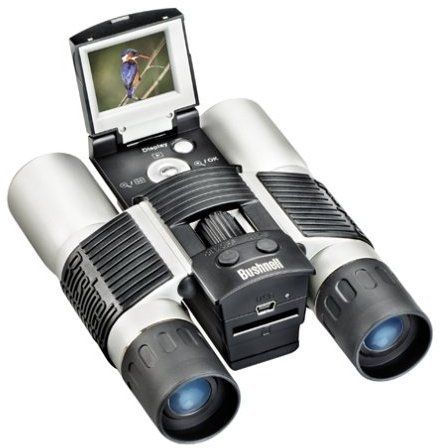
Digital Binoculars – The Wave of The Future


There are so many different applications one can think of for a digital camera. Who doesn’t like to take pictures? Family events, sporting events and nature trail hikes are all great places to snap that perfect picture and to preserve that special memory for all time.
The regular camera - which uses film instead of digital technology - are often bulky and an annoying contraptions. The changing of the film and making sure it doesn’t get wet or exposed to the elements once taken from the camera is enough to irritate most people.

With a digital camera, you have none of these problems. They are smaller than their film camera counterparts and less heavy. They can also hold many more pictures and instead of paying twenty dollars to have your film developed, you can do it yourself in the comfort of your home.

What more could you ask for, right?

For starters, how about binoculars with a digital camera. That’s right, no more fiddling around in your pouch or your backpack to find the digital camera, in order to take a picture of something you’ve been viewing through your binoculars. Now you can just push a button, and take that picture easily with your brand new digital camera binoculars.

Sounds like paradise, doesn’t it?

It does to any outdoor enthusiast who has ever tried to take a picture of something they were viewing through their binoculars.

Digital binoculars used to be very expensive when they first came out. But now, thanks to the advent of the latest technology, that is no longer the case. Today you can buy a perfectly good pair of digital binoculars for about two hundred and fifty dollars. Of course, there is a lot of junk on the market today. You can buy much cheaper digital binoculars, but they are likely to break more easily, and are a waste of money in the long run.

If you are going to take the time and effort into buying something—including digital camera binoculars—you might as well do it right and safe yourself the aggravation that would result in the long run if you buy garbage.

The first thing you should do, is check out some of the reviews that are available on the Internet and in some sporting goods magazines. That way, you can get an unbiased view of the different products and make a wise, informed decision.

The second thing you should consider doing is looking at some of the more popular and reputable binocular companies, such as Bushnell, Nikon and Zeiss. These companies (as well as a few others) are the tops in their field for a reason.

Next you should make sure you understand all the fancy talk you are sure to be exposed to by the people who are knowledgeable about digital binoculars. Terms like Mega pixels and video slots can quickly frustrate those of us who prefer English. By learning the terms and being aware of their meaning, you will be harder to con, and also you will be able to make a more informed buying decision.

Digital binoculars are heavier than regular binoculars (those that don’t have a camera of any kind) but technology advances have made them smaller than they used to be, and they aren’t too much of a burden to carry around. After all, you would have been carrying a digital camera and a binocular in any case, so if they are all in one, it makes little difference to the weight you would have been carrying.

If you plan on taking a lot of pictures and using binoculars at the same time, there is no wiser investment you could make than picking up digital camera binoculars for yourself.

Article courtesy of wild-bird-watching.com


Grab The Bookmarketer For Your Site